
Monarch butterflies embark on a marvelous migratory phenomenon. They travel between 1,200 and 2,800 miles or more from the United States and Canada to central Mexican forests. There the butterflies hibernate in the mountain forests, where a less extreme climate provides them a better chance to survive. While Monarchs may not be on the endangered list yet, deforestation, global warming, and loss of milkweed, which Monarchs need to survive as larva, threaten their survival.
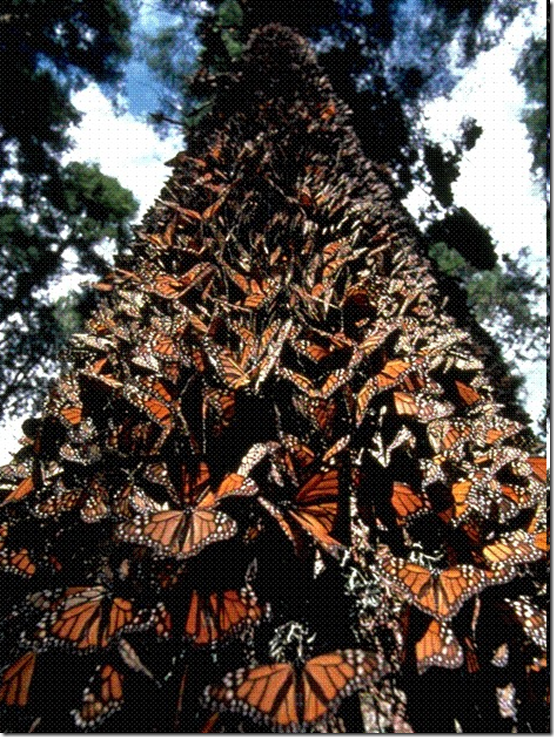
When the Monarch reach their destination in Mexico Monarchs will rest on the branches of oyamel fir trees and go into a torpor, like a hibernation only not as deep a “sleep.” But due to deforestation in Mexico the Monarchs have no place to go during the winter. These overwintering sites are being threatened by forest degradation due to legal and illegal logging, climate change, and land conversion for farming that may negatively affect oyamel fir forest. The deforestation of these sites can have harmful effects on the overwintering monarch populations. The oyamel
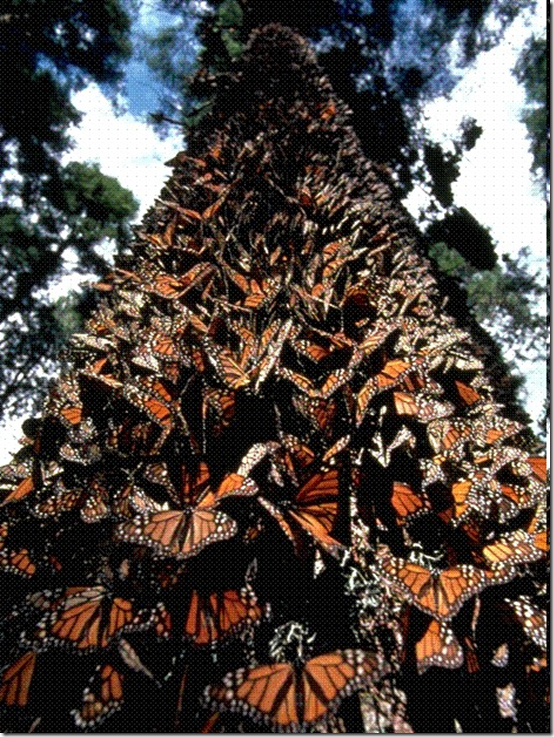 fir are both a blanket and umbrella during the winter, protecting monarchs from extreme cold temperatures and precipitation. The logging near overwintering sites and the deforestation from other causes can alter the microclimate there which may increase monarch mortality.
Subsistence-farming activities may also impact oyamel fir forests and the monarchs that stay overwinter there. With the diversion of water for human use, monarchs may be forced to travel further in search of water, which may drain their lipid reserves more quickly. Oyamel fir forest may also be threatened by the impending effects of climate change. Recent climate change models suggest that these forests may be exposed higher stress from heat and drought which may cause them to be more vulnerable to insects and disease. Some level of forest and overwintering habitat degradation may also be caused by unregulated tourism in the monarch overwintering areas.
Monarchs travel a long distance for their migration. But with the world warming suitable habitats for the Monarchs move north and scientist are unsure if the butterflies will be able to fly the distance. One of the things that the scientist predict will happen with global warming is wet cold winters. Monarchs can survive cold weather when they are dry, but if a Monarch is wet and the temperate drop the Monarch will freeze to death. For a Monarch to fly their body temperate must be above 86º F, if their temperate is less then 86 degrees then they will sit in the sun or “shiver” (to shake their wings quickly) their wings to warm up.
Milkweed is a vary important part of the Monarch butterflies life. Monarch larva eat it when they hatch and when it blooms M onarchs know to lay their eggs. between 1999 and 2009 60% of native milkweed died out because of a weedkiller called Roundup. To bring back the milkweed people started to plant tropical milkweed witch blooms in the fall. Scientist are worried that this will confuse the Monarchs. They will stop migrating and lay
their eggs, which would freeze in the winter.

For more information visit:
http://blogs.scientificamerican.com